
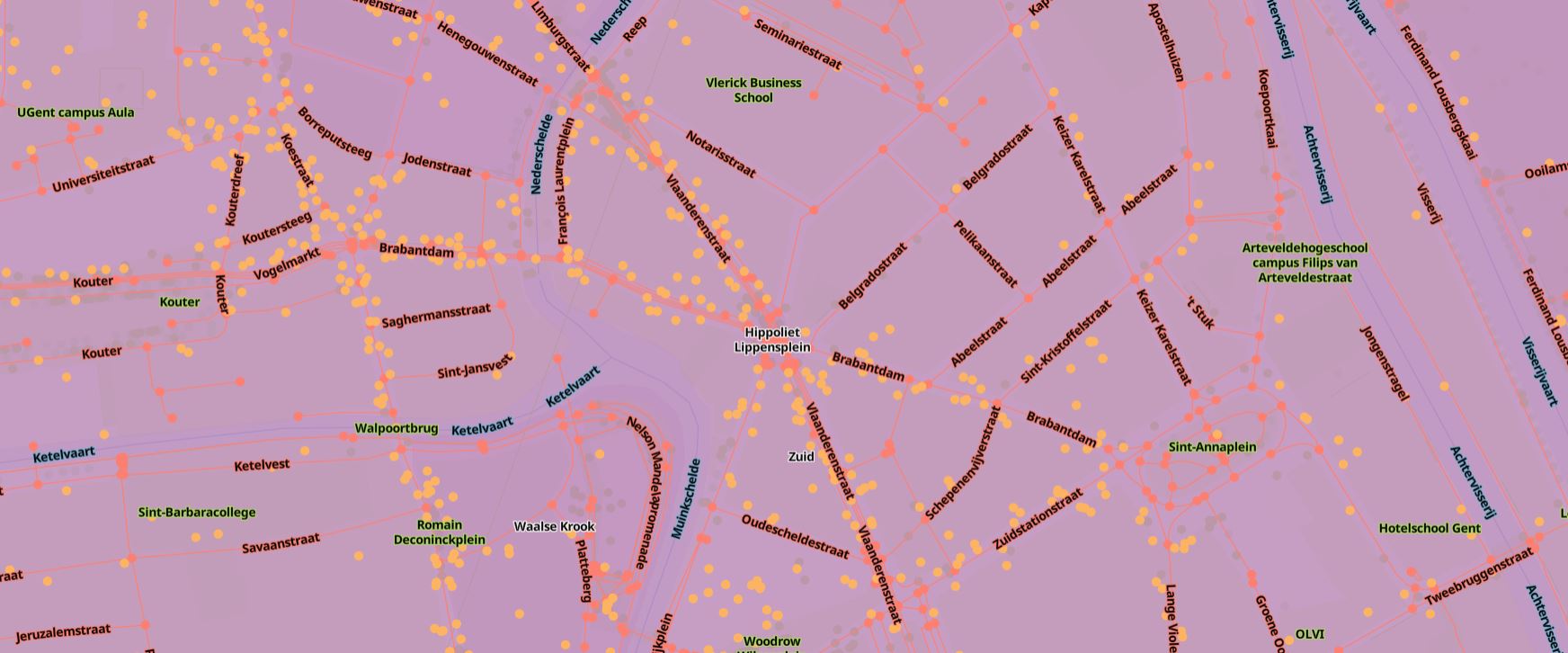
LAS VEGAS — William Mortenson, the newly appointed executive director of the Overture Maps Foundation, outlined an ambitious global expansion for the open-source mapping initiative during the recent CES tech conference. Mortenson, a former senior executive at the National Geospatial-Intelligence Agency, succeeds industry veteran Marc Prioleau, who is retiring after guiding the foundation through its formative years. Under Mortenson’s leadership, the foundation is targeting new markets in Asia and South America while deepening ties with U.S. agencies like the Department of Transportation to create a unified, interoperable mapping framework.

The leadership transition comes as Overture moves from data collection to widespread adoption. Mortenson emphasized that his mission is to “expand the organization” and educate the masses on the benefits of open data architecture. “I think what they’re doing is really going to revolutionize where we go in the future,” Mortenson said. He believes Overture can solve fragmentation problems that have plagued the industry for over a decade. He cited upcoming integrations with Uber UBER 0.00%↑ and Bright Query, which will add 150 million points of interest, as key milestones for the foundation in 2026.
Michael Harrell, senior vice president of engineering maps at TomTom, joined Mortenson at CES to highlight why fierce competitors like Amazon AMZN 0.00%↑ and Microsoft MSFT 0.00%↑ are collaborating on the project. Harrell explained that the industry has collectively recognized that basic map data is no longer a competitive differentiator. “It doesn’t help us, the customers, or anyone for us all to be building it individually,” Harrell said. By building the “non-differentiating” core data together, Harrell noted that companies can reallocate their engineering resources toward the specialized, proprietary work that sits on top of the shared base layer.
A primary driver for this collaboration is the staggering cost of data integration, often referred to as a “data tax” on the industry. Harrell noted that some major tech firms spend three times more money on “conflating” or merging disparate datasets than they do on the data itself. “That’s a core problem in the industry,” Harrell said. “We should not be spending this heavy tax burden on trying to integrate data because it doesn’t help anyone.” Mortenson echoed this sentiment, stating that the foundation’s Global Entity Reference System (GERS) is designed to eliminate this friction by providing a universal ID for physical locations, moving the industry away from redundant “dumb blocks” of geographic information.
Looking forward, the foundation is positioning its verified data as the essential “training data” for the next generation of artificial intelligence. Mortenson invited AI companies to join the foundation’s steering committee, asserting that high-fidelity maps are critical for reliable machine learning.