
Commercial navigation signal will be introduced for planned 250-satellite constellation…
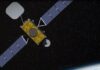
The authorization expands an earlier license for Xona’s Pulsar-0 demonstration satellite and allows the company to introduce a high-power commercial navigation signal in the L-band spectrum used by existing global navigation systems. Pulsar signals are designed to be up to 100 times stronger than traditional GPS, incorporate a dynamic cryptographic watermark for anti-spoofing protection, and work with many existing receivers through software or firmware updates.

Xona is preparing to launch its first six production satellites in October and is scaling manufacturing at its facility in Burlingame. Since Pulsar-0 launched in June 2025, the satellite has completed more than 350 transmission passes across four continents, with signals independently tracked by more than a dozen commercial receivers.
The company closed a $170 million Series C funding round in March led by Mohari Ventures Natural Capital, with participation from Craft Ventures, ICONIQ, Woven Capital, NGP Capital, Samsung Next, Hexagon and others. Xona has partnered with receiver and equipment makers including Trimble TRMB 1.21%↑, Septentrio, STMicroelectronics STM 1.36%↑, Safran and Keysight KEYS 1.22%↑ under its Pulsar Verified program, while competing with other emerging low Earth orbit navigation efforts such as TrustPoint and the established government systems operated by the United States, Europe, China and Russia.
“From the beginning, we were told that what we wanted to do was impossible,” Brian Manning, co-founder and CEO of Xona, said in a statement. “A commercial company had never built a system like Pulsar, and no one had been authorized to introduce a new, high-power navigation signal alongside GPS. This decision is the culmination of years of engineering, testing and coordination, clearing the way for a capability the world increasingly needs.”
In other company news, Furuno confirmed this week that Japan’s first reception of live Xona Pulsar LEO positioning signals occured in Nishinomiya.