
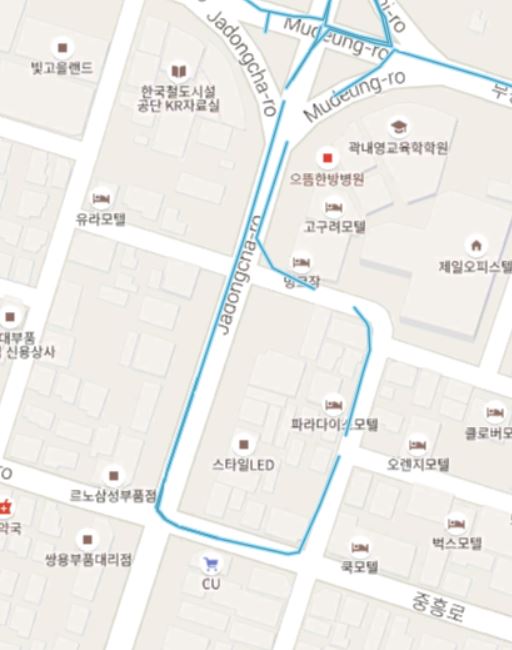
South Korea’s government conditionally approved Google’s GOOG -0.62%↓ long-standing request to export high-precision 1:5,000-scale map data to overseas servers, reversing nearly 20 years of restrictions rooted in national security concerns and enabling a fully functional Google Maps service in the country for the first time.
The Ministry of Land, Infrastructure and Transport granted the approval after a review by officials and private experts, allowing Google to provide real-time navigation, turn-by-turn directions and detailed global routing that had previously been limited or unavailable due to data localization rules. Google Vice President Cris Turner welcomed the decision, stating the company looks forward to collaborating with local officials to deliver a complete Google Maps experience.

The move addresses longstanding frustrations for international travelers and businesses, who found Google Maps unreliable in South Korea — one of the few major markets where the service lacked full features like accurate walking or driving guidance — forcing reliance on domestic alternatives such as Naver Maps and KakaoMap.
For years, South Korea barred exports of detailed map data, rejecting Google’s bids in 2007 and 2016 over fears that precise geographic information could expose sensitive military installations and security facilities, especially given the country’s technical state of war with North Korea. These restrictions, part of broader geospatial data protection policies, required high-resolution data to remain on domestic servers, hindering foreign providers’ ability to offer competitive location-based services and drawing criticism from the United States as discriminatory under trade agreements like the KORUS FTA.
The policy shift, influenced by U.S. pressure to level the playing field for American tech firms, domestic innovation goals and efforts to bolster the geospatial industry, includes strict safeguards: Google must process data locally, export only pre-approved navigation-related information (excluding contour lines or other sensitive details), blur military and security sites in products like Google Maps, Google Earth and Street View (including historical imagery), restrict longitude and latitude coordinates for South Korean territory, and establish security incident response frameworks. The government retains oversight to request revisions or verify compliance.
The decision holds major significance for the location technology sector, particularly autonomous driving and AI-driven mobility. High-precision maps at 1:5,000 scale — where 1 centimeter represents 50 meters — serve as critical infrastructure for advanced driver-assistance systems, software-defined vehicles and future 6G-era applications. Previously, restrictions limited foreign access to this data, protecting domestic investments but potentially slowing innovation in connected and autonomous tech.