
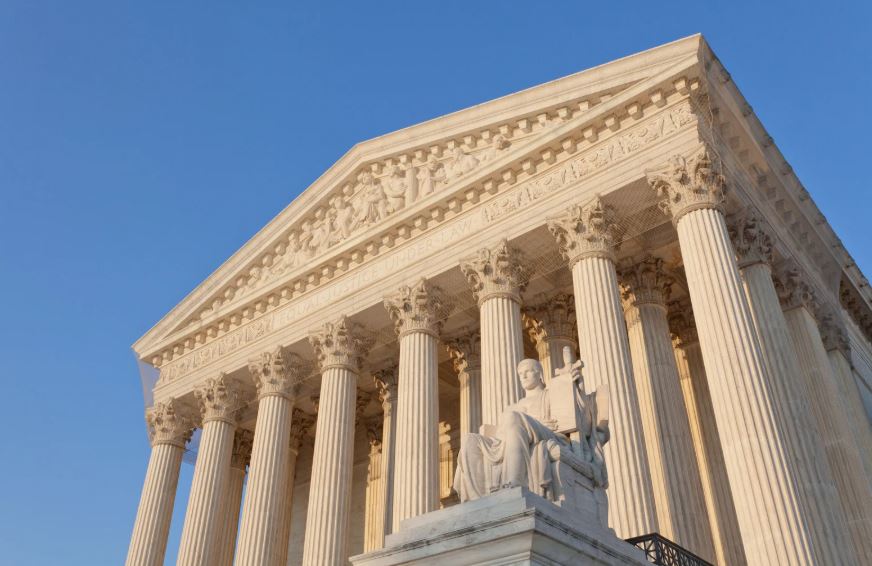
The U.S. Supreme Court ruled 6-3 late last month that law enforcement access to a person’s digital location history through a “geofence warrant” constitutes a search under the Fourth Amendment. The decision establishes that smartphone users maintain a reasonable expectation of privacy regarding the location data collected by tech companies, meaning police must meet constitutional requirements to obtain it.
Writing for the majority, Justice Elena Kagan rejected the government’s argument that users forfeit privacy protections simply by allowing third-party applications to track their physical movements during ordinary phone use. This also means that law enforement has to obtain a warrant to have access to, for example, Google’s location data history when requesting geofencing information.

“We are grateful that the Court recognized that geofence warrants open the door to unprecedented government surveillance and must be checked with constitutional guardrails,” said Andrew Birrell, president of the National Association of Criminal Defense Lawyers
The landmark digital privacy case, Chatrie v. United States, originated from a 2019 armed robbery of a federal credit union in Midlothian, Virginia. Lacking a specific suspect, investigators secured a geofence warrant compelling Google to sweep its vast database and identify every active mobile device within a 150-meter radius of the crime scene.
In other location privacy news:
- T-Mobile TMUS 1.88%↑ and its Sprint subsidiary have petitioned the U.S. Supreme Court to refund $92 million in fines that the companies previously paid to the Federal Communications Commission for illegally selling customers’ location data to third-party aggregators. The $92 million fine stems from actions where carriers, including AT&T T 0.57%↑ and Verizon VZ 0.28%↑, failed to safeguard customer location data, allowing third parties to access sensitive real-time information without meaningful customer consent.
- The Bureau of Alcohol, Tobacco, Firearms and Explosives (ATF) canceled a contract with Penlink for the Webloc commercial location data tool. The ad-tech surveillance platform allowed the agency to perform warrantless searches of mobile device locations, prompting a bipartisan push from lawmakers.